

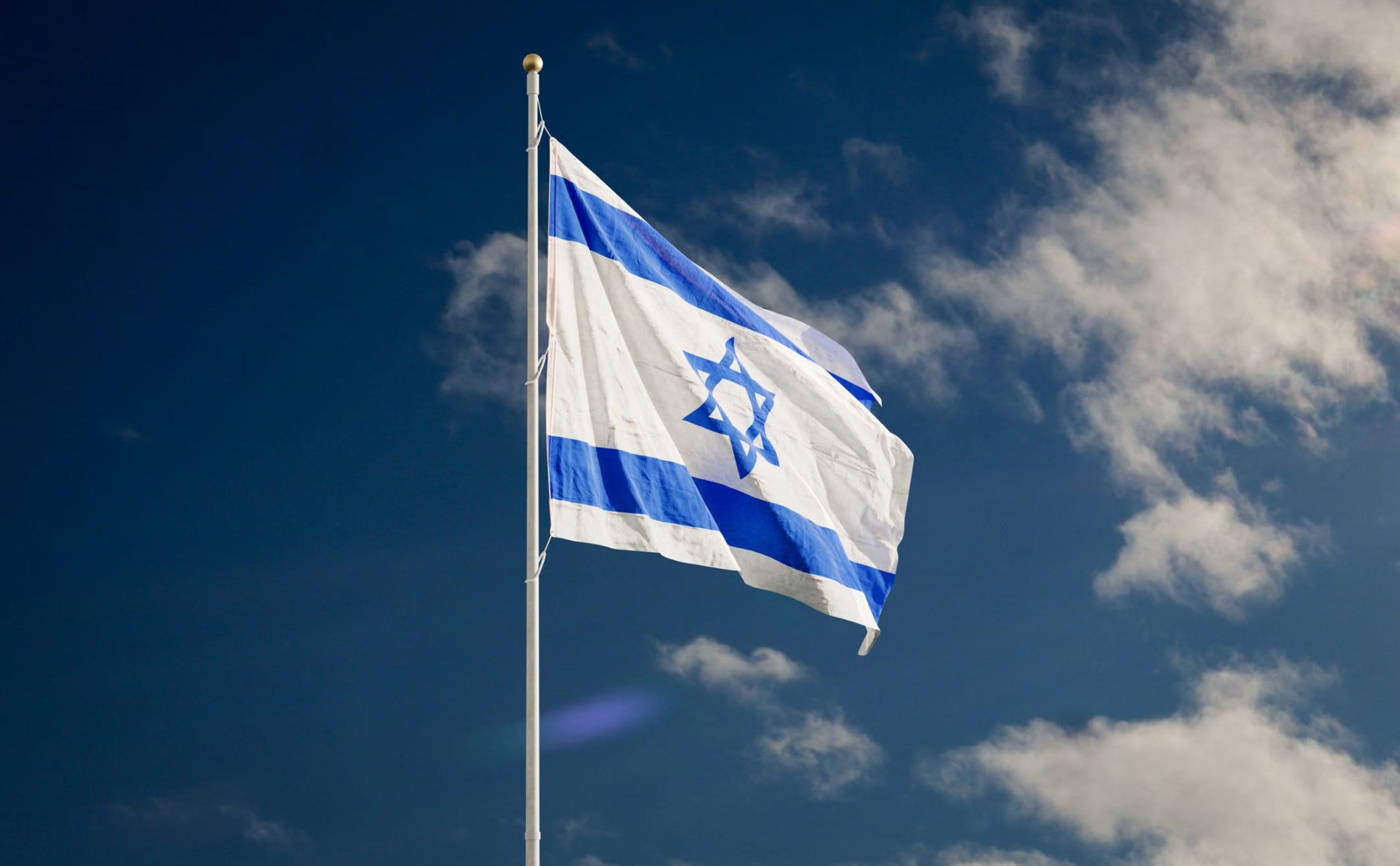
I was raised Jewish.
There were synagogues, traditions, holidays, family dinners, inherited stories. A people shaped by exile, survival, shared memories, and resilience. There was beauty in much of it. There still is. I will always have a fondness for my upbringing. Judaism gave me an understanding of history, suffering, perseverance, and the importance of questioning authority.
After my Bar Mitzvah at age thirteen, I was mostly out of there. By my early thirties, I was gone. I had stepped outside organized religion entirely, including my own.
Still, I tend to see the world through a Jewish lens, and as someone who follows the news, I have watched what has happened in Israel over the course of my lifetime.
I have witnessed its government become one of the most morally compromised and politically corrosive institutions on earth. It has become increasingly defined by militarism, corruption, expansionism, and the normalization of human suffering.
Criticizing the government of Israel is not antisemitism.
For decades, Israeli governments have continued building and supporting settlements widely regarded under international law as illegal. Entire communities have been carved into occupied land while Palestinians face checkpoints, restrictions, home demolitions, and shrinking territory. It is difficult to speak honestly about peace while another population lives under permanent military control.
Then there is Gaza.
A place where a generation of children have now grown up surrounded by blockade, surveillance, bombings, shattered infrastructure, and hopelessness. Hamas bears responsibility for violence and extremism. But Hamas is not the Palestinian people, just as the Israeli government is not the Israeli people. Reducing the suffering of Gaza solely to Hamas allows the broader forces surrounding it to escape examination.
Collective punishment hardens populations.
Despair radicalizes.
And perhaps most troubling has been the extraordinary influence of pro-Israel lobbying organizations and political pressure on American foreign policy. The relationship between the United States government and Israel has long made honest debate difficult. American politicians routinely offer strong, often near-unconditional support for the Israeli government, even when its policies conflict with positions they might otherwise defend in other parts of the world.
The deeper question is larger than Israel.
What happens when a people shaped by centuries of persecution begins to define its security through permanent military power? What happens when historical suffering becomes intertwined with territorial claims, political power, and the belief that one people has a special right to a particular piece of earth?
The wilderness taught me something institutions rarely do: no living system survives long without balance.
Human societies are no different.
Up here, the earth doesn’t recognize ancient tribal boundaries. A forest doesn’t care who arrived first. Water moves downhill regardless of political borders. Life depends upon reciprocity, limitation, adaptation, and coexistence.
After decades in the mountains, I no longer view the world through the lens of chosen peoples, promised lands, or ancient tribal claims.
What I care about now is human dignity.
Honest speech.
The reduction of suffering.
Living in reciprocity with the earth as our home.
The courage to confront corruption, even within one's own tribe.
Especially then.
Because real moral integrity means telling the truth even when it implicates your own people.
That may be the most Jewish thing I carried with me after all.
The willingness to wrestle with G-d, history, power, and conscience itself.
Impactful insight that resonates with me. I’m so confused about what’s really going on that my eyes glaze over most times with confusion. You’ve brought home a way to help me begin to unravel that confusion—to make me want to care. I’m humbled by what you’re going through.
Thank you, Robert. Beautifully and powerfully stated.